
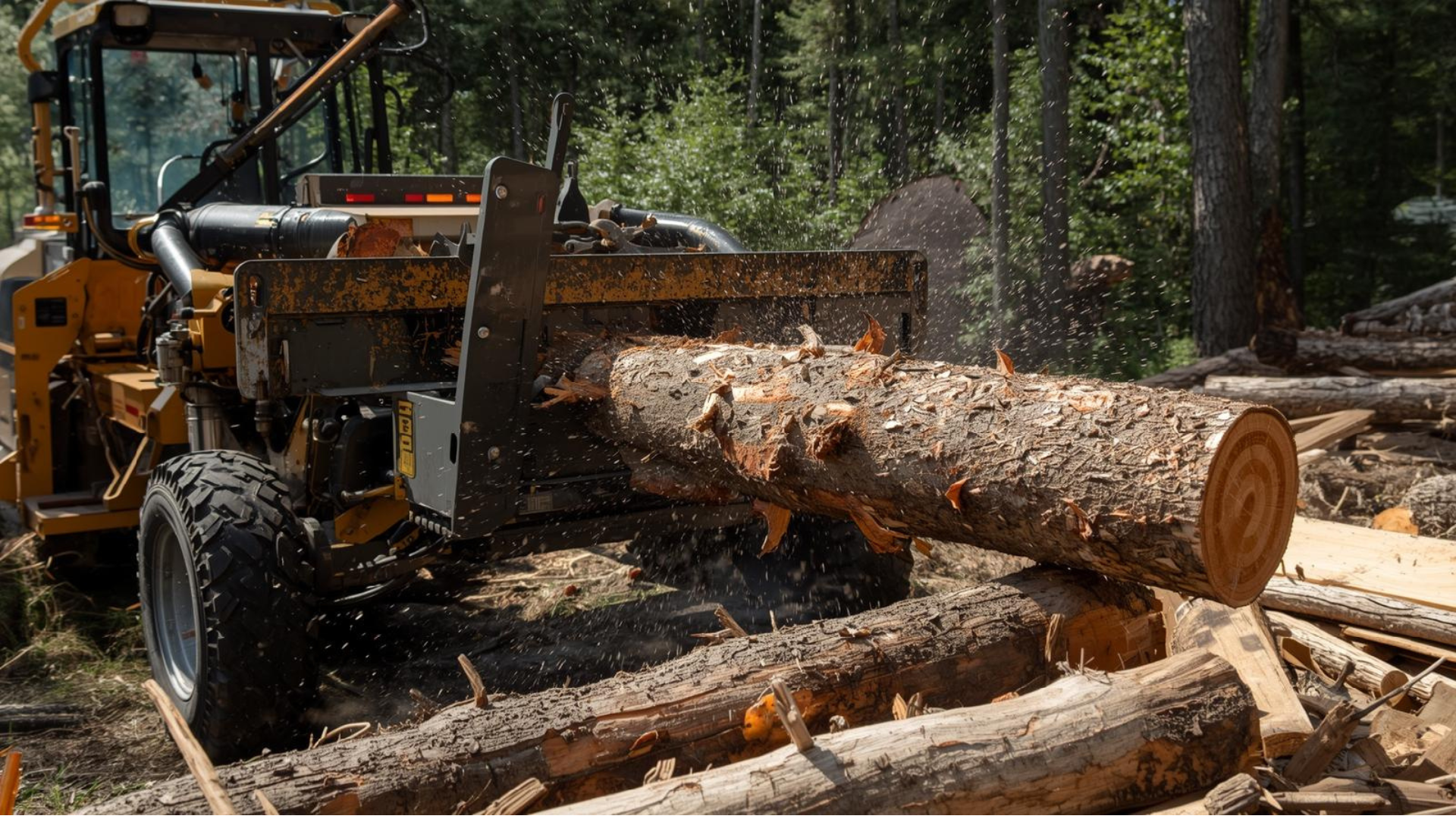
The main question - what are you actually vaccinating?
Vertical and horizontal wood splitter are very similar on paper. In practice, however, the choice most often falls on one question: do you have a lot of thick, heavy pieces or mostly standard logs?
Vertical splitter: less lifting, better for large diameters
Vertical wood splitter is usually the first choice when working with beech, oak and more knotty pieces. Since the log often stands on the floor or on a lower table, there is less lifting and less “breaking the back”.
When to choose a vertical splitter:
- when you have a lot of pieces over ~30 cm in diameter,
- when you graft knotweed deciduous trees,
- when you work alone and want a more stable clamping.
What is the main disadvantage:
If you are grafting mostly smaller pieces, the vertical can sometimes be slower in rhythm because you move around the machine more.
Horizontal splitter: compact and fast for standard logs
Horizontal wood splitter is great if you have mostly uniform pieces and you want a practical solution for the yard or workshop. Machines are often smaller, easier to clean up, and friendly for regular home use.
When horizontal is the right choice:
- when grafting standard diameters (e.g. conifers, smaller deciduous trees),
- when you want a compact machine,
- When you have limited space.
Typical weakness:
With thicker logs, there is more lifting to the working height. If you don't want that, vertical is often a better option.
Power (tonnage) - regardless of layout
Many people think too much about the layout and not enough about the power. Too little tonnage means jams and “tearing”, whether the machine is vertical or horizontal.
Note on tonnage and type of timber:
- spruce/fir:~5-7 t to Ø ~25 cm
- beech/birch:7-10 t to Ø ~30 cm (knots 10-12 t)
- oak/hornbeer/acacia:12-20 t for Ø 30-40 cm
When to skip both and use an excavator wood splitter?
If you work in the field, you have very large diameters or you want to reduce logistics (moving logs to the machine), it is sometimes wiser to consider Hydraulic Splitter For Excavator - Wood splitter. Such a solution is useful for thick and knotty cuts, because power and stability are brought by the working machine, and the operator remains in the cabin. The concept is explained in the article Smart way to split firewood - BearSplitterYou can find more information at bearsplitter.com.

Safety and maintenance (regardless of type)
The choice of layout does not help if the workplace is chaotic or the knife is top. Stick to the basics:
- flat, dry base, orderly flow of work,
- goggles/visor, gloves, safety shoes,
- do not bypass the safety functions,
- regularly check the oil, knife/wedge and gaskets.
For brief safety instructions, see The 5 most important safety rules.
How to make a decision in 30 seconds?
To sum up purely practical:
- Thick, heavy, knotted logs → vertical wood splitter.
- Standard log, little space → horizontal wood splitter.
- Very large diameters or field work u → hydraulic splitter for excavator (excavator splitter).