
Why mistakes happen at all
Grafting is seemingly simple: put a log in, press and you're done. In practice, the combination of incorrect tonnage, poor ergonomics and not enough maintenance leads to slow work, “tearing” instead of a clean cut and an increased risk of injury.
1. Too weak wood splitter (too little tonnage)
With spruce, it still goes somehow, but with beech or oak, “torture” begins: the machine presses, the log does not open, the cycle lengthens, and everything becomes sluggish.
How do you notice it:
- the log is “plucked” instead of clean-cut open,
- a lot of congestion at the nodes,
- feeling that the engine or hydraulics are constantly working at the limit.
How do you fix:
Choose power by type of wood and diameter. If you regularly graft hard deciduous trees (oak/hornbeer/acacia) and larger diameters, better take a grade higher. For a basic overview of types and strengths, see types, power and drives.
2. Uneven, wet, or too tight workplace
You waste most of your time not on grafting, but on walking, lifting and catching logs that slide off the rootstock. This is a classic mistake when working quickly in the yard or in the forest.
Better practice:
Set a clear flow: logs → splitter → stack. The base should be flat and dry, and the logs should have somewhere to “go” when you split them.
3. Wrong log alignment technique
If you put a log past the axis of the wedge, it often happens that it splits sideways, and in the worst case, throws or squeezes it.
What works:
- align the log with the axis of the wedge,
- split the knots in layers or start on the “softer” side,
- Do not look for shortcuts on two-handed machines.
To explain the basic procedure and logic of vaccination, an article is useful What is firewood grafting?.
4. Poorly maintained knife/wedge and hydraulics
Signs: slow cycles, vibration, greasy traces.
Why is this happening? Top knife increases resistance and heats the oil; leaks lower efficiency.
What to do? Regularly grinding/changing the knife, control Hydraulic Oil, review gasket/tubing.
5. Logs are too thick or uneven
This defect only manifests itself later: the logs are dry in appearance, but still damp in the middle. Often this happens when grafting “at a fast pace” and large sections remain.
What helps:
Uniform logs dry more evenly. Therefore, it is better to split the log into a meaningful cross-section than to leave “large cubes”. After grafting, you immediately fold the firewood correctly - raised from the ground, ventilated, only the top covered. Practically explained in the article How to store firewood to keep it dry.
6. The wrong type of machine for your way of working
Someone buys a horizontal splitter, and then lifts heavy logs for the whole season. The other has a vertical one, but it splits only tiny logs and takes up too much space for it. The type of machine must match your habits.
Quick rule:
- many thick pieces → vertical is often more ergonomic,
- small to medium pieces → horizontal is practical and compact,
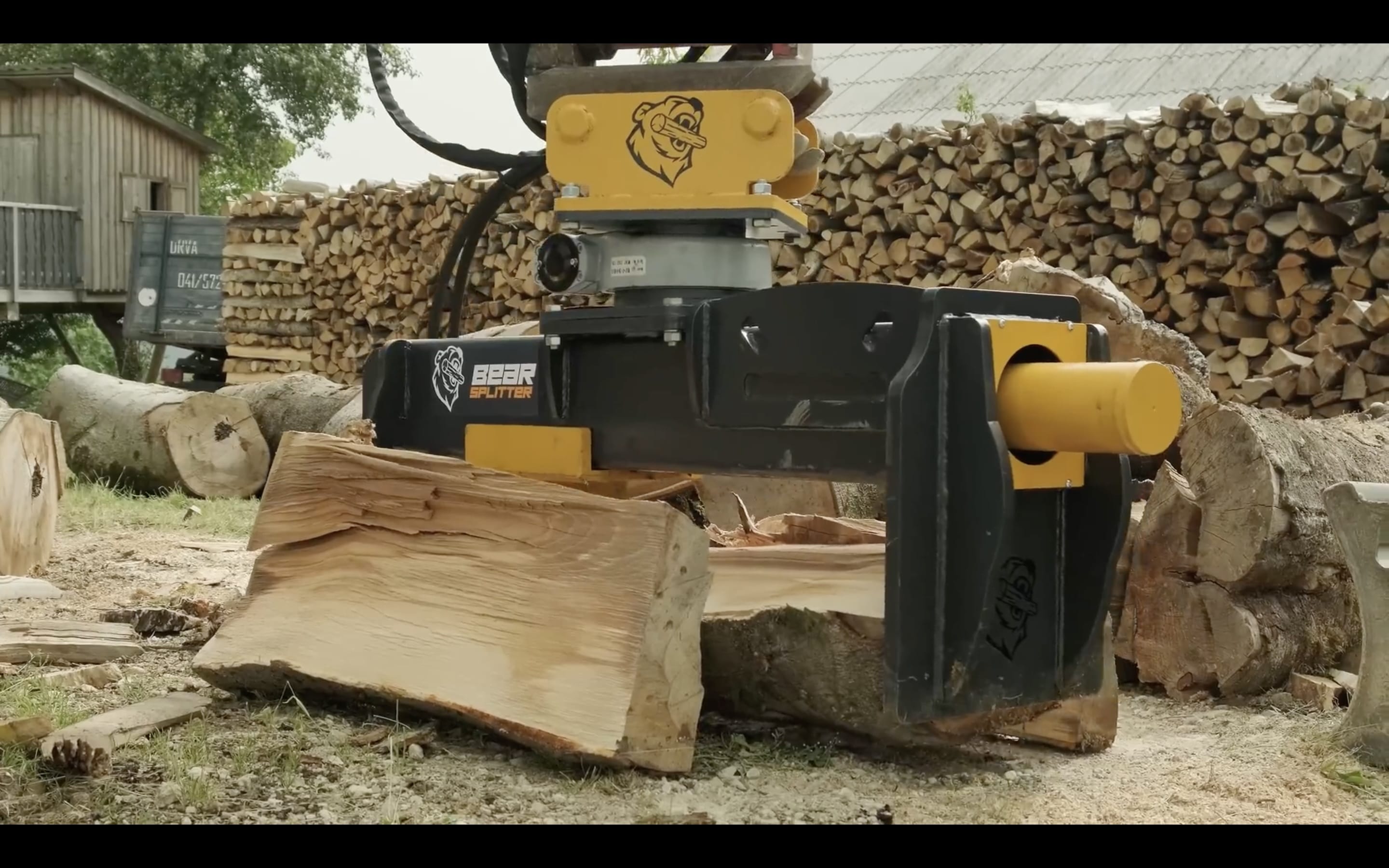
- terrain, large diameter logs, logistics in the forest → it makes sense to consider Hydraulic Splitter For Excavator (excavator splitter). An example of why it is worth buying is in the article Smart way to split firewood - BearSplitter
7. Neglect of personal protection
Crutches, bounces and slips are formed when grafting. Glasses/visor, gloves and safety shoes are not an exaggeration, but a standard. Especially when combined with sawing and folding.
If you want a minimum of security in one place, read the article The 5 most important safety rules
When to consider a different approach?
If you work in the field, you work very large diametersdo you want to shorten the logistics, combine chainsawwith excavator cleaver. The operator remains in the cabin, there is less movement, and the pace of work is higher. A full overview of the solution and examples can be found at bearsplitter.com.
A brief summary
Most of the errors in wood grafting are related to incorrect power, poor workplace, sideways placed logs and neglected maintenance. When you fix it, it will be yours wood splitter (Holzspalter) worked faster, safer and with less cost per cubic.